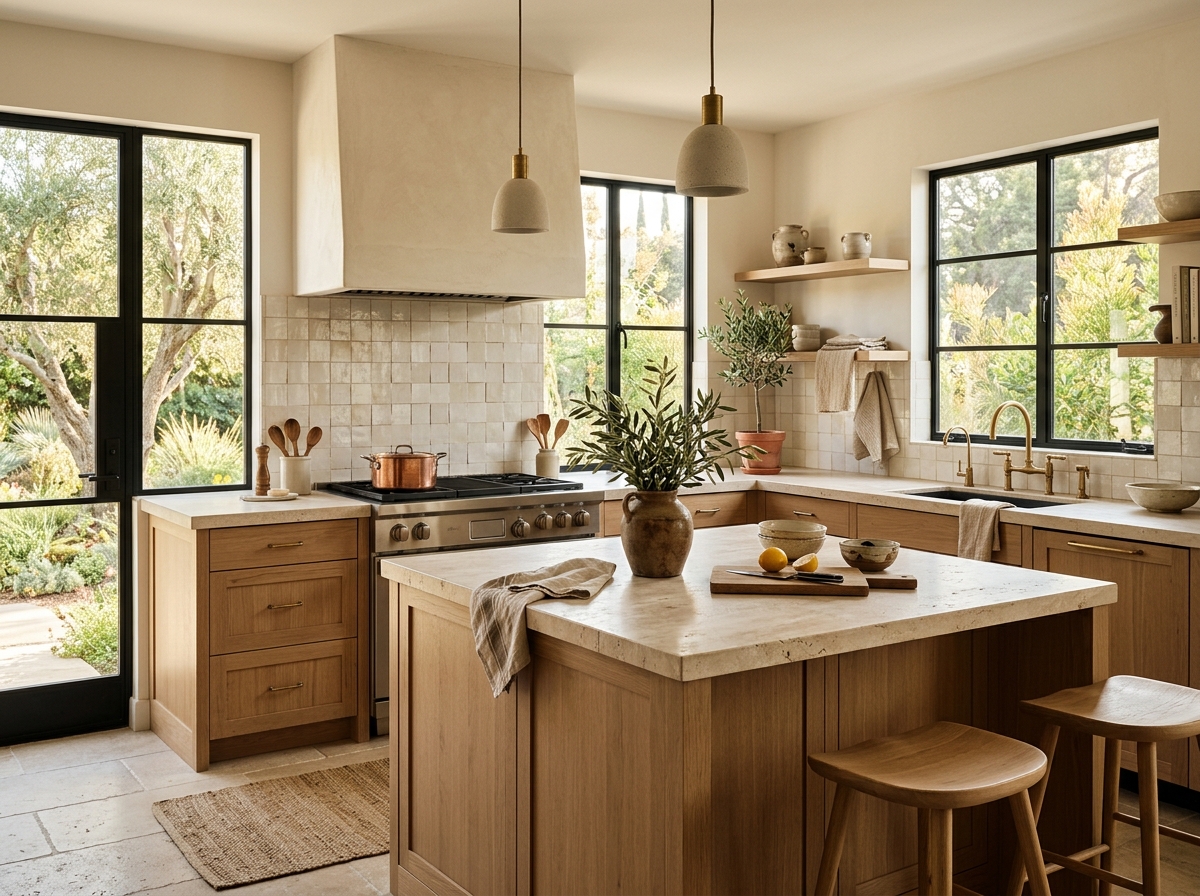
A warm California-style kitchen rarely depends on one particular color or design trend. Much of its character comes from materials that feel authentic, tactile, and connected to the natural environment. Wood grain, softly textured stone, handmade tile, clay, plaster, and woven fibers can give a kitchen depth without making it feel overly decorated.
Natural materials also work especially well with the relaxed approach found throughout many California interiors. They respond beautifully to sunlight, develop subtle character with age, and can help connect the kitchen visually with patios, gardens, and other living spaces.
The key is choosing materials for more than appearance. Durability, maintenance, moisture, sourcing, indoor air quality, and how different finishes interact should all influence the final palette. Readers comparing finishes can explore more ideas in our Materials & Finishes guides.
Natural Wood Brings Warmth and Character
Wood is one of the easiest ways to soften a kitchen filled with hard surfaces. White oak, walnut, maple, and other species can provide distinctive grain patterns while working with both contemporary and traditional architecture.
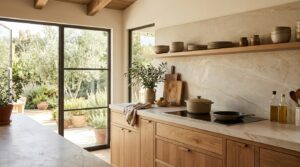
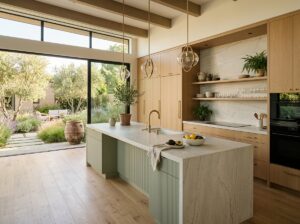
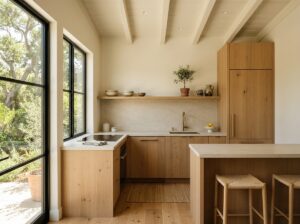
For a California-inspired kitchen, light to medium wood tones often work particularly well because they reflect natural light and complement stone, plaster, clay, and muted colors. Wood does not have to cover every surface. Cabinet fronts, open shelving, an island base, ceiling beams, or even a few carefully chosen details can introduce warmth.
The U.S. Forest Service Wood Handbook explains that wood properties can change with moisture and environmental conditions. In a kitchen, this makes appropriate construction, finishing, and care important, particularly around sinks, dishwashers, and other moisture-prone areas.
Look Beyond Wood Color
When comparing cabinetry, consider the grain, cut, finish, and amount of visual variation. A clear or lightly tinted finish can preserve more of the wood’s natural character, while heavy stains may create a more uniform appearance.
Homeowners who want additional information about responsible wood sourcing can also look for recognized certification systems. The Forest Stewardship Council’s chain-of-custody system provides a framework for tracking certified forest-based materials through the supply chain.
Natural Stone Creates a Strong Visual Anchor
Natural stone can become one of the defining elements of a California-style kitchen. Marble, granite, quartzite, limestone, soapstone, and travertine each have their own pattern, texture, porosity, and maintenance characteristics.
A large stone island can act almost like a piece of furniture or sculpture. For a warmer look, consider materials with cream, sand, beige, muted gray, or soft brown undertones rather than relying only on bright white surfaces.
Variation is part of natural stone’s appeal. Veining, fossils, color shifts, pits, and other characteristics can make one slab noticeably different from another. Viewing the actual slab before fabrication can therefore be more useful than selecting from a small sample.
The Natural Stone Institute provides information on stone sustainability, sourcing, environmental product declarations, and responsible production. It also notes that natural stone itself does not emit VOCs, although adhesives, sealants, and other products used during installation may have their own characteristics.
Match the Stone to the Way You Cook
A beautiful surface still needs to fit the household. Some stones are more resistant to scratching, staining, heat, or acids than others. A material that works beautifully in a lightly used entertaining kitchen may require more attention in a household that cooks several meals every day.
Before choosing a slab, ask about recommended sealing, cleaning, stain resistance, edge details, and whether the material is suitable for the intended application.
Handmade Tile Adds Texture Without Clutter
Tile offers another way to introduce natural texture. Handmade ceramic, zellige-inspired surfaces, terracotta, and clay tiles can bring gentle irregularity that contrasts with precise cabinetry and appliances.
Small variations in glaze, surface depth, and edges help light move differently across a backsplash. This can make even a restrained neutral palette feel layered.
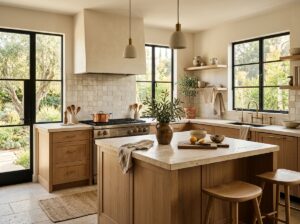
For a calm California kitchen, consider using tile as a supporting material rather than creating competing patterns throughout the room. A warm cream backsplash behind oak cabinets or terracotta flooring paired with pale plaster walls may be enough to establish the character of the space.
Plaster and Lime-Inspired Finishes Soften the Room
Not every kitchen surface needs to be glossy or perfectly smooth. Plaster and mineral-inspired wall finishes can introduce quiet movement and a more handcrafted appearance, particularly on range hoods, feature walls, and areas away from heavy splashing.
Finish selection should still account for cleanability and the specific location. Kitchens generate moisture, grease, and frequent contact, so decorative wall products should be appropriate for their intended use.
Indoor air quality also deserves attention when selecting paints, adhesives, sealers, and finishes. The U.S. Environmental Protection Agency’s remodeling guidance recommends considering low-emitting products and providing ventilation during and after application.
Reclaimed Materials Can Add History
Natural materials do not always need to be newly manufactured. Reclaimed wood, salvaged stone, vintage hardware, and carefully reused architectural elements can give a kitchen character that is difficult to reproduce with entirely new products.
An old timber might become shelving, for example, while recovered stone could be repurposed for a small counter or decorative element. The goal is not to make the kitchen look rustic unless that is the intended style. One reclaimed element can work as a subtle counterpoint within a contemporary room.
The EPA’s construction and demolition materials guidance encourages salvaging and reusing suitable building materials when practical. California’s CalRecycle also notes that nonhazardous lumber from construction can be reused or recycled rather than simply discarded.
Build a Balanced Material Palette
The most successful natural-material kitchens usually rely on restraint. Too many strong grains, stones, tiles, and colors can compete with one another. Instead, establish one dominant material, one supporting texture, and a few quieter finishes.
A simple combination might pair white-oak cabinets with pale limestone counters, soft plaster walls, and handmade cream tile. Another kitchen could combine walnut cabinetry, warm stone, terracotta flooring, and aged metal hardware.
Readers planning the entire room rather than individual finishes can browse our Kitchen Design section for layout and planning ideas. If your kitchen opens directly to a garden or patio, our guide to designing a California kitchen for indoor-outdoor living can also help connect the material palette with the surrounding spaces.
Let Natural Materials Age Gracefully
A natural-material kitchen does not need to remain visually unchanged forever. Wood may deepen in color, certain stones can develop patina, metal finishes may soften, and handmade tile will continue to show the variations that made it distinctive in the first place.
That gradual change can be part of the appeal. Rather than chasing a perfectly uniform showroom finish, a warm California-style kitchen can celebrate materials that reveal grain, texture, craftsmanship, and everyday use.
Choose materials that suit how you live, learn what maintenance they require, and allow enough visual breathing room for each finish to stand on its own. The result can feel relaxed and contemporary while still having the depth and permanence that natural materials bring to a home.